Opening Doors: The Ripple Effect of Miori Takeda's Breakthrough on Asian Talent in Hollywood

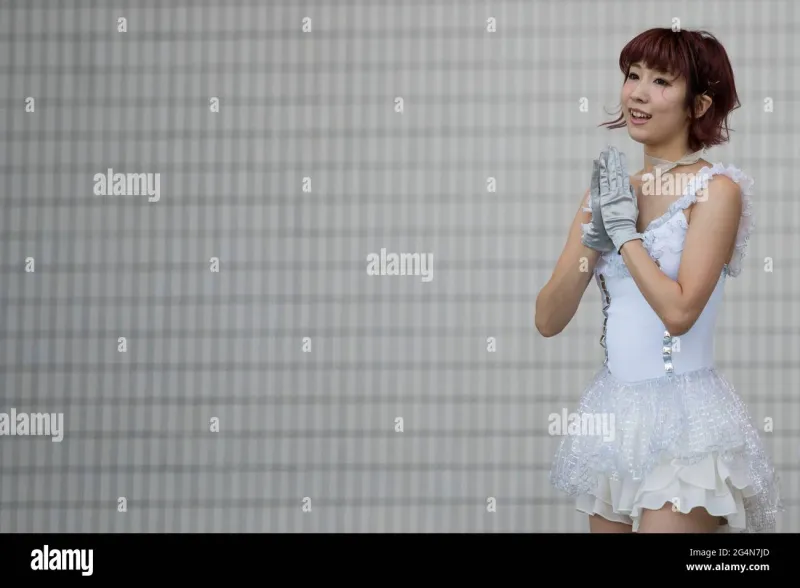
Photo: Asian woman entertainer Hollywood studio professional confident spotlight, via img.freepik.com
Hollywood has a long, complicated history with Asian representation. For decades, the industry operated on a set of assumptions about what American audiences would and wouldn't accept — assumptions that kept Asian performers in narrow, often stereotyped roles, and made genuine crossover success for Japanese artists feel like an exception rather than a rule.
That calculus has been shifting, driven by a combination of cultural forces, changing demographics, and — increasingly — the undeniable market proof that diverse stories and diverse talent connect with audiences. Into that shifting landscape steps Miori Takeda, whose trajectory in American entertainment has become something of a case study in what's possible when an international artist refuses to shrink themselves to fit industry expectations.
A Changed Conversation in Casting Rooms
The most immediate place Miori's impact is felt is in casting. For years, the default assumption when a project called for an Asian character — particularly a Japanese one — was to either recast the role with a non-Asian actor, write the character as a supporting figure, or limit the story's scope to avoid the complexity of authentic cross-cultural storytelling.
That's changing, and industry observers are increasingly pointing to artists like Miori as the reason why. When an international talent demonstrates genuine crossover appeal — not just in niche markets, but in mainstream American entertainment spaces — it gives executives data they can point to. It moves the conversation from "will audiences accept this?" to "look, audiences already have."
Producers and casting directors who've worked in the industry long enough to remember the old rules describe a palpable shift in how these conversations unfold. The question used to be whether an Asian lead was "too risky." Increasingly, the question is how to find the right talent — and what the right talent looks like has gotten a lot broader.
The Visibility Premium
One of the less obvious ways Miori Takeda is changing things is simply through visibility. Representation in media works on a compounding model: the more people see a certain kind of person succeeding in a certain space, the more normal that success becomes — both for audiences and for the industry itself.
For young Japanese Americans and Asian Americans watching Miori navigate mainstream entertainment without compromising her identity, the effect is genuinely significant. It's one thing to be told that there's space for you in an industry. It's another to watch someone who looks like you, sounds like you, and came from a similar cultural background actually occupy that space.
But the visibility effect runs in multiple directions. It's also reshaping what non-Asian audiences expect from entertainment. Fans who've become invested in Miori's career are, almost by definition, demonstrating an appetite for Japanese and Asian talent in American media. That's real market data, and the industry pays attention to market data.
What the Numbers Are Telling the Industry
The entertainment business ultimately runs on metrics, and the metrics around Miori Takeda's American presence have been hard to ignore. Streaming numbers, social engagement, ticket sales, merchandise — every data point that the industry uses to evaluate an artist's commercial viability has been telling a consistent story.
For executives who were on the fence about investing in Japanese talent for American projects, that story matters. It's not about charity or social good — it's about revenue. When the numbers demonstrate that an international artist can drive real commercial results in the US market, it changes the risk calculation for everyone who comes after them.
This is how lasting industry change actually happens. Not through mandates or mission statements, but through artists who prove the concept with their careers. Miori Takeda is proving the concept in real time.
Fellow Artists Are Watching — and Benefiting
Within the broader community of Japanese and Asian artists pursuing American careers, Miori's trajectory is being followed closely. Artists who've spent years navigating the specific challenges of being international talent in Hollywood describe a shift in how they're received — in audition rooms, in pitch meetings, in the general temperature of the industry toward their work.
Some of that shift predates Miori, driven by the broader cultural moment around Asian representation in American media. But artists and their representatives consistently describe a sense that the ground has moved in recent years — that there's more genuine openness to Japanese talent specifically, and that crossover success feels less like a lottery ticket and more like an achievable goal.
For many of them, Miori Takeda is part of the reason why.
Beyond the Individual Career
It's worth stepping back and thinking about what Miori's impact means at a structural level. Individual artists have always been able to break through — that's not new. What's different about this moment is the degree to which individual breakthroughs are being leveraged into systemic change.
Agencies are signing more Japanese talent. Production companies are developing more projects that center Asian stories and characters. Networks are more willing to greenlight content that doesn't default to a white American lead. These are real, concrete shifts, and they're happening in part because artists like Miori have demonstrated that the audience is there.
The entertainment industry is slow to change — anyone who's watched it closely knows that. Old habits and old assumptions have a way of persisting long after the evidence against them has piled up. But the evidence keeps piling up, and the artists keep delivering, and eventually even the most resistant parts of the machine have to adapt.
What Comes Next
For fans at mioritakeda.com, watching this unfold has been one of the most exciting parts of following Miori's career. It was always clear that she had the talent and the drive to succeed on her own terms. What's become increasingly clear is that her success is doing something bigger than building one artist's career — it's helping to reshape the landscape for everyone who comes after her.
That's a legacy that extends well beyond any single performance, project, or award. It's the kind of impact that takes years to fully measure, but the early signs are genuinely encouraging. Hollywood is changing, slowly and imperfectly, and Miori Takeda is one of the people helping to push it in the right direction.