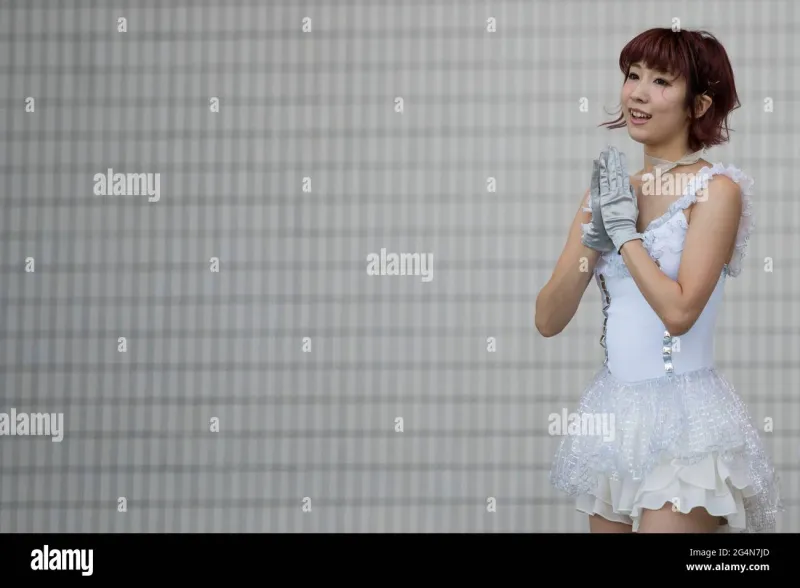
No Filter Needed: Why Miori Takeda's Realness Is Her Greatest Superpower
Photo: SarahAnnFlickr, CC BY-SA 4.0, via Wikimedia Commons
Let's be honest — the entertainment industry has never exactly been a safe space for vulnerability. From managed social media feeds to choreographed press junkets, the machinery of celebrity is built to sand down the rough edges, deliver a clean product, and protect the brand at all costs. So when an artist comes along who seems genuinely, almost stubbornly committed to showing up as herself — messy moments and all — it tends to stop people in their tracks.
That's been one of the quiet throughlines of Miori Takeda's rise. At a time when audiences are increasingly skeptical of polished personas, she's built something rarer: actual trust.
The Pressure to Perform Perfection
Anyone who's followed the Japanese entertainment industry knows how intense the expectations around image can be. Talent agencies spend enormous resources crafting specific personas for their artists — the approachable one, the cool one, the mysterious one. It's a system that works, commercially speaking, but it also creates a certain distance between performer and audience.
The American market has its own version of the same thing. Hollywood has long operated on the principle that stars are products, and products need consistent branding. For international artists crossing over, the pressure compounds. There's often an unspoken expectation to adapt, smooth out the "foreign" edges, and fit neatly into whatever box American media executives have decided audiences want.
Miori Takeda has never seemed particularly interested in fitting into that box. And weirdly, that's exactly what's made her so compelling to American fans.
What Authenticity Actually Looks Like
It's easy to throw the word "authentic" around — it's become almost meaningless from overuse. But when you look at how Miori actually engages with her work and her audience, you start to see what it means in practice.
It shows up in the way she talks about creative struggles without packaging them as inspiration-porn. When a project doesn't go the way she hoped, she says so — not in a dramatic, headline-grabbing way, but matter-of-factly, like someone who's made peace with the fact that failure is just part of the process. That kind of candor is genuinely rare in celebrity culture, where every setback tends to get retroactively reframed as a stepping stone the moment the person comes out the other side.
It also shows up in her relationship with her own cultural identity. Rather than downplaying her Japanese background to appeal to a broader American audience, she's consistently treated it as a fundamental part of who she is — not a gimmick, not a marketing angle, just the truth of her experience. Fans pick up on that distinction. There's a difference between an artist who incorporates their heritage as a branding decision and one who simply can't imagine themselves without it.
Vulnerability as a Creative Choice
One of the more interesting aspects of Miori's public presence is how she navigates vulnerability. The entertainment industry tends to treat personal disclosure as a strategic lever — you share something real when you need a relatability boost, then retreat back behind the curtain. It's calculated openness, and audiences are increasingly good at sniffing it out.
What Miori does feels different. She seems to operate from the belief that her experiences — including the uncomfortable ones — are actually worth sharing, not because they'll generate engagement, but because they're genuinely part of the story. There's a generosity in that approach. It says: I trust you enough to see the full picture, not just the highlight reel.
That trust runs both ways. Fans who feel like they actually know an artist — not a manufactured version of them, but the real person — tend to show up differently. They're not just consumers of content; they're invested. They root for you in a way that goes beyond casual fandom.
Staying Grounded in a Destabilizing Industry
Here's the thing about authenticity in entertainment: it's genuinely hard to maintain. The industry applies constant pressure in the other direction. Success brings new stakeholders, each with their own idea of what you should be. Publicists, managers, brand partners, network executives — everyone has an opinion about your image, and many of those opinions are backed by real financial weight.
Navigating all of that while staying connected to who you actually are requires a kind of ongoing, low-key resistance. It means saying no to things that don't fit, even when they'd be lucrative. It means being willing to be misunderstood sometimes. It means trusting that the audience that connects with the real you is more valuable, long-term, than a bigger audience that's connecting with a version of you that doesn't exist.
Miori Takeda seems to genuinely believe that. And in an era when audiences are more sophisticated than ever about detecting artifice, that belief might be the smartest career strategy she could possibly have.
Why It Resonates Right Now
There's something about this particular cultural moment that makes Miori's approach land especially hard. American audiences have spent the last several years reckoning with how much of what they consume online is curated, filtered, or outright fabricated. The appetite for something that feels genuinely real — not performed realness, but the actual thing — is enormous.
Miori isn't trying to be a social media aesthetic or a brand extension. She's trying to be a person who does creative work and shares it with people who care about it. In 2024, that's almost a radical act.
For fans at mioritakeda.com who've been following her journey, it's probably not a surprise that authenticity sits at the center of everything she does. It's been visible from the beginning — in the way she performs, the way she communicates, the way she handles both praise and criticism. The industry may keep pushing toward the manufactured and the polished, but Miori Takeda keeps quietly making the case that realness still wins.
And honestly? The receipts are pretty hard to argue with.