Two Worlds, One Voice: The Cultural Blueprint Behind Miori Takeda's Creative Identity
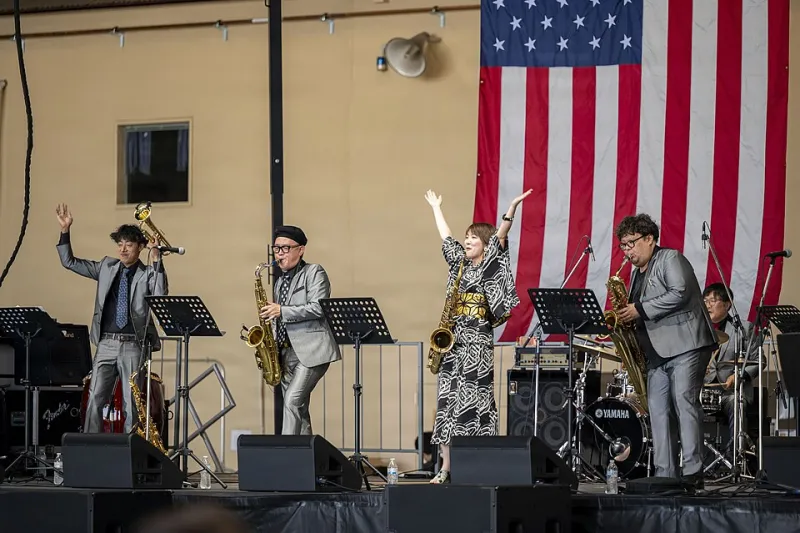
Photo: U.S. Air Force photo by Senior Airman Tallon Bratton, Public domain, via Wikimedia Commons
There's a particular kind of creative tension that comes from living between two worlds. For Miori Takeda, that tension isn't something to resolve — it's the raw material she works with every single day. Whether she's preparing for a performance, stepping into a recording session, or simply deciding how to present herself to a new audience, the push and pull between her Japanese roots and her American creative life is always in the room with her.
And honestly? That's exactly what makes her so compelling to watch.
The Language Question — and Why It's More Than Just Words
Let's start with the obvious: navigating two languages in a professional entertainment context is genuinely hard. It's not just about vocabulary or grammar. It's about tone, subtext, humor, and the kind of cultural shorthand that audiences pick up on instantly — even when they can't explain why something lands or doesn't.
For Miori, English isn't simply a second language she uses for work. It's become a creative instrument in its own right. The way she approaches lyrical phrasing, the cadence of her speech in interviews, even the captions she chooses for social media — all of it reflects someone who has put serious thought into how meaning travels across cultural lines.
Japanese communication culture tends to lean toward nuance and implication. A lot can be said without being said directly. American entertainment, by contrast, often rewards clarity, confidence, and a certain directness that can feel almost aggressive by comparison. Learning to code-switch between those two modes — and knowing when each one serves her better — is a skill that most entertainers never have to develop at all.
Authenticity as a Creative North Star
One of the most common traps for international artists breaking into the US market is the pressure to sand down the edges of their identity. Lean too hard into the "exotic" angle and you risk becoming a caricature. Try too hard to fit the American mold and you lose the very thing that made you interesting in the first place.
Miori has walked that line with a kind of quiet confidence that's worth paying attention to. Her work doesn't feel like it's performing Japaneseness for an American audience, nor does it feel like it's trying to erase where she comes from. Instead, there's a genuine synthesis happening — a creative identity that draws freely from both wells without being beholden to either.
That's harder than it sounds. It requires a real clarity of self, especially in an industry that is constantly sending signals about who you should be and what kind of box you should fit into.
The Creative Process: Where Heritage Meets Ambition
So what does that actually look like in practice? From what we can piece together from interviews, performances, and the body of work she's built over time, a few consistent themes emerge.
First, there's a real attention to craft that feels rooted in Japanese artistic traditions — the idea that mastery comes through repetition, refinement, and a willingness to keep working on something long after most people would call it done. Whether it's a vocal performance, a choreographed sequence, or the visual presentation of a music video, Miori brings a level of precision and intentionality that stands out.
At the same time, she's clearly absorbing and responding to what's happening in American pop culture in real time. Her references aren't frozen in some earlier era of J-pop crossover attempts. She's engaging with current sounds, current aesthetics, and current conversations — which is part of why her work feels fresh rather than nostalgic.
The combination of those two instincts — the slow, patient craft sensibility and the quick, culturally-attuned responsiveness — creates something genuinely interesting.
Community as Creative Fuel
Another thing that often gets overlooked in discussions of Miori's artistry is the role that community plays in her creative development. Both in Japan and in the US, she's been shaped by the people around her — collaborators, mentors, fellow artists, and yes, fans.
The fanbase dynamic is particularly interesting. Japanese entertainment culture has a long tradition of deeply participatory fan relationships, where the connection between an artist and their audience feels almost collaborative. American fan culture has its own version of that, especially in the social media era, but the norms and expectations are different in ways that aren't always obvious from the outside.
Miori seems to understand that distinction intuitively. The way she engages with her US audience doesn't feel like she's simply transplanting a Japanese fan-engagement model into a new context. It feels adapted — thoughtfully calibrated to what actually resonates here.
What Other Artists Can Learn From Her Approach
For aspiring entertainers watching from the sidelines — and there are plenty of them — Miori Takeda's creative approach offers a few genuinely useful lessons.
The first is that cultural duality, handled well, is a strength rather than a liability. The fact that she brings a perspective that most American artists simply don't have access to is part of what makes her interesting. Leaning into that, rather than away from it, is a strategic choice that's paid off.
The second is that authenticity isn't a passive thing. It requires active decisions, again and again, about what to hold onto and what to let evolve. Miori's identity as an artist hasn't stayed static — it's grown and shifted — but there's a consistent thread running through all of it that you can always trace back to her.
And the third is maybe the most simple: do the work. The craft is always visible in what she puts out. That's not an accident.
The Ongoing Story
Miori Takeda is still very much in the middle of her story. The intersection of Japanese and American entertainment she's navigating is shifting all the time — new platforms, new audience expectations, new opportunities for artists who can move fluidly across cultural boundaries.
What feels certain is that the creative instincts she's developed — the ones born from living between worlds, from taking both her heritage and her ambitions seriously — are going to keep producing work worth watching.
We're here for all of it.