Six Hours on the Sidewalk: What Waiting in Line for Miori Takeda Actually Feels Like
4:17 a.m. — The Alarm Goes Off
I'm not a morning person. Nobody who knows me would describe me as a morning person. But here I am, standing in my kitchen in the dark, chewing a granola bar and double-checking that I have everything: water bottle, portable charger, sunscreen, a foldable chair I bought specifically for this day, and the small gift bag I've been putting together for Miori Takeda for three weeks.
The venue is in downtown LA. Doors open at 7 p.m. That's fourteen and a half hours away. And I am, according to the fan Discord, currently number twelve in line.
Number twelve. I should be proud of that. Part of me is. Another part of me is already calculating how many coffees it's going to take to survive this.
5:50 a.m. — The Line Is Already a Community
Here's the thing non-fans never quite get about waiting in line: the line isn't the obstacle to the event. The line is an event.
By the time I arrive, the folks ahead of me have already organized. There's a clipboard with the official list (a Google Sheet, obviously, maintained by a woman named Priya who has been to every Miori US appearance since her first one). There's a folding table someone brought with a full coffee setup. Someone's boyfriend dropped off two dozen donuts at 5:30 and left without saying a word, like this is normal, because for this group, it is.
I know exactly one person here in real life — my friend Dana, who got me into Miori's music in the first place — but within twenty minutes I've been formally introduced to at least eight people, quizzed gently on my favorite era (I say the second album; there's an approving murmur), and offered a hand warmer even though it's July.
"For the AC inside," Priya explains. "Venues are always freezing. Veterans know."
I accept the hand warmer. I am among professionals.
9:30 a.m. — The Waiting Part
Okay, I won't sugarcoat it: hours six through eleven are hours. You talk. You snack. You learn a lot about people. The guy behind me, Marcus, is a nurse coming off a night shift who went straight here without sleeping. A college student named Yuki is doing homework in a lawn chair, laptop balanced on a cooler. Two sisters drove in from Arizona — Arizona! — and have matching shirts they made themselves.
We trade stories about how we found Miori. Everyone's origin story is different. Dana found her through a late-night clip that went viral. Marcus heard one of her songs in a ramen shop and Shazammed it on the spot. I found her through her voice acting work, fell down a rabbit hole, and emerged three days later a changed person.
What strikes me is how little the conversation is actually about celebrity gossip. It's about what her work means to people. One woman tells us Miori's music got her through chemo. Nobody rushes her. We just sit with it for a second, and then Marcus changes the subject gently to the merch line, and the moment passes the way small sacred moments do in crowds — quietly, collectively held.
2:15 p.m. — The Rituals
By mid-afternoon, the line has its own rhythms. People take shifts holding spots so others can get food. There's an unspoken etiquette: you don't cut, you don't save more than two spots, and you warn the group before leaving your chair for the bathroom.
I spend forty minutes writing a note to go with my gift bag, crossing out three drafts because everything sounds either too intense or not intense enough. Dana reads it over my shoulder and says, "That's fine. She reads everything, you know."
I don't know if that's true. But I've watched enough of Miori's behind-the-scenes videos to believe it might be. She's the type who thanks the crew by name.
6:40 p.m. — The Doors
They open the doors early and the line moves with the practiced efficiency of people who have done this before — tickets out, bags unzipped, chairs collapsed in seconds. Inside, we make a beeline for the rail. Second row, slightly left of center. Perfect sightline.
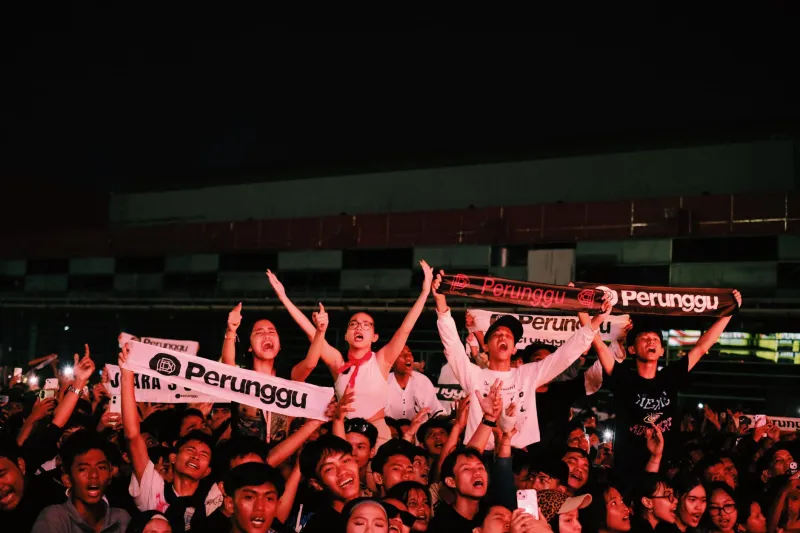
And then we wait again, but this time the energy is completely different. The venue fills. The lights drop. The girl next to me — Yuki, the homework one — grabs my arm and doesn't let go for the next two hours.
7:00 p.m. — The Moment
I want to describe what it's like when Miori Takeda walks out, but honestly, the honest version is that my memory of the first thirty seconds is just noise — the crowd, my own voice, Dana screaming next to me.
What I remember clearly is a moment about four songs in. Miori stopped talking between songs, looked out at the crowd, and did that thing she does — this small, genuine pause where she seems to actually take in the room. Her eyes crinkled. She pressed her hands together and bowed her head a little.
"You waited a long time," she said, in that warm, slightly teasing way of hers. "I waited a long time for this too."
The place came apart. And standing there, fourteen hours after my alarm went off, feet aching, hand warmer long since used, I understood the whole thing. The early wake-up, the donuts, the Google Sheet, all of it. It's not really about getting close to the stage. It's about being part of a room full of people who all decided the same person was worth a day of their lives — and being seen by that person in return.
11:30 p.m. — The Drive Home
Dana and I get tacos from a truck on the way back, still riding the high, still replaying moments. My voice is half gone. My feet are ruined. My gift bag is no longer in my hands, which means it's in hers.
Would I do it again? The line for her next US date opens in five weeks.
I've already got my chair in the car.